Just as citizens in the Philippines exercise their right to vote during elections, Filipinos abroad are able to do the same. The Commission on Elections (COMELEC) facilitates overseas voting, in coordination with the Department of Foreign Affairs (DFA) and other government agencies.
The COMELEC is the main government agency in charge of enforcing and administering all laws and regulations related to Philippine elections. Whether conducting national, local, or special elections, this agency is responsible for ensuring the conduct of “free, fair, and honest” elections.
Organizational Structure
The COMELEC is headed by the Chairman and six Commissioners, all of which are appointed by the President of the Philippines, with consent from the Commission on Appointments (CA). They are tasked to hold office for seven years, without reappointment.
The Chairman serves as the Presiding Officer and Chief Executive Officer of the COMELEC. Assisting the Commission are an Executive Director and Deputies, 17 Regional Election Directors, Provincial Election Supervisors, and Election Officers in cities and municipalities across the country.
COMELEC Functions
According to its official website, the COMELEC’s functions include:
- Enforcing and administering all laws and regulations related to the conduct of elections;
- Exercising exclusive original jurisdiction over all contests related to the elections, returns, and qualifications of all elective regional, provincial, and city officials;
- Deciding all questions affecting elections, including the registration of voters, appointment of election officials and inspectors, and determination of the number and location of polling places;
- Deputizing law enforcement agencies of the government, including the Armed Forces of the Philippines (AFP), for the purpose of ensuring free, orderly, honest, and peaceful elections;
- Registering political parties and organizations of coalitions;
- Filing petitions in court for inclusion or exclusion of voters; investigating and prosecuting cases of violations of election laws;
- Recommending to the Congress effective measures to minimize election spending, and to prevent and penalize all forms of election frauds, offenses, and malpractices;
- Recommending to the President the removal, or disciplinary action, of any officer or employee who violated or disregarded its order or decision; and
- Submitting to the President and the Congress a comprehensive report on the conduct of each election.
Overseas Voting
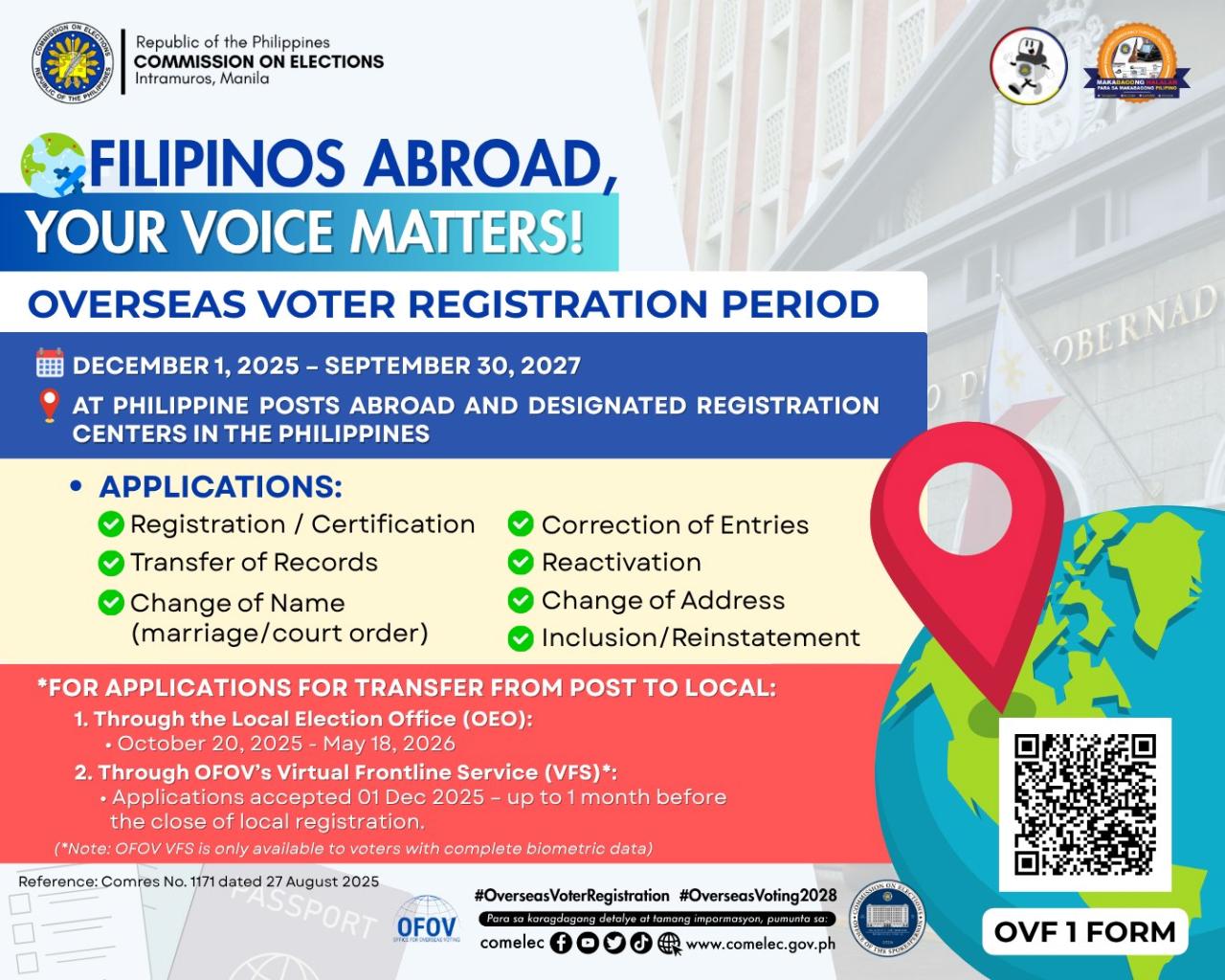
Filipino citizens abroad who are at least 18 years old on the day of elections can exercise their right to vote through overseas voting. The COMELEC office that is responsible for this process is the Office for Overseas Voting (OFOV).
Typically, overseas voting is held at Philippine embassies, consulates, field voting centers, mobile voting centers, and other establishments that are authorized by the COMELEC. The voting period lasts for 30 days.
Filipino overseas voters can vote in person or by mail, depending on the process and regulations set by the Commission. For “in person” voting, the Special Board of Election Inspectors (SBEI) is tasked to conduct the voting and counting of votes. Meanwhile, for “postal voting,” the Special Ballot Reception and Custody Group (SBRCG) is responsible for taking custody of the ballots and distributing them to registered voters.
Overseas votes are counted manually or through a vote counting machine by the SBEI. Eventually, votes are canvassed by the Special Board of Canvassers (SBOC), prior to finalization and release of election results.
Contact Information: COMELEC Main Office
If you have any queries or concerns about overseas voting, you can get in touch with the COMELEC Main Office through the following contact details:
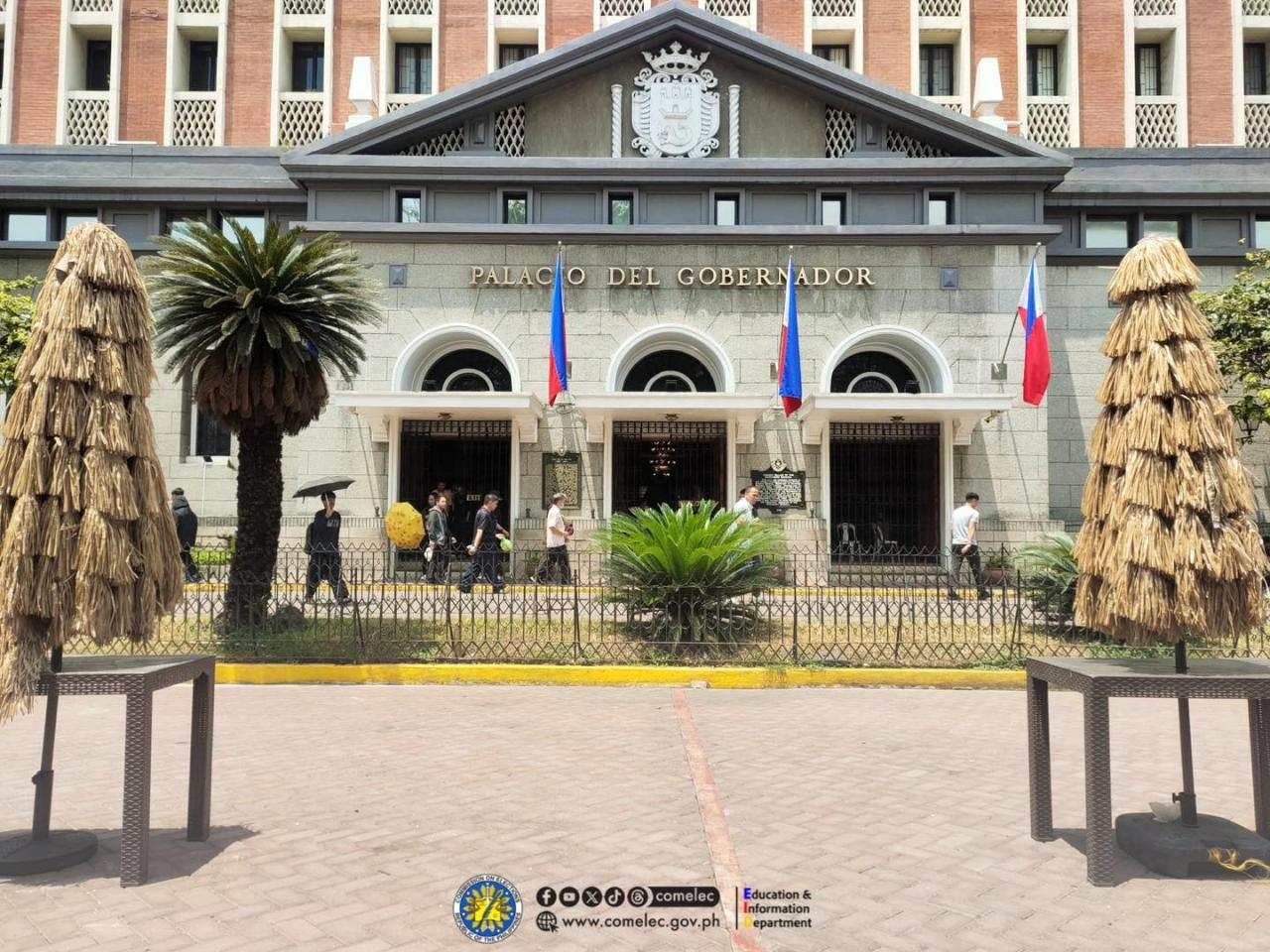
Address: Palacio del Gobernador Building, General Luna St, Intramuros, Manila, 1002 Metro Manila
Website: https://www.comelec.gov.ph/
Facebook: https://www.facebook.com/comelec.ph/
Google Map:
Thanks to the overseas voting process of the COMELEC, Filipinos abroad can vote for their preferred candidates during elections. Meanwhile, another government agency that the DFA often works with is the Commission on Filipinos Overseas (CFO). Check out this link to learn more about it.